
Introduction
Bone broth is everywhere right now, from cartons in the fridge aisle to powders you can mix at home. The choice is not always obvious.
If you're comparing bone broth powder vs liquid, the real question is how each one fits into your daily routine. Both are used for similar reasons, including gut support, collagen, and protein intake, but they are not the same.
This guide gives you a clear side-by-side breakdown — what each form actually is, how they differ nutritionally, and which one makes more sense based on your goals and lifestyle.
What Is Bone Broth Powder?
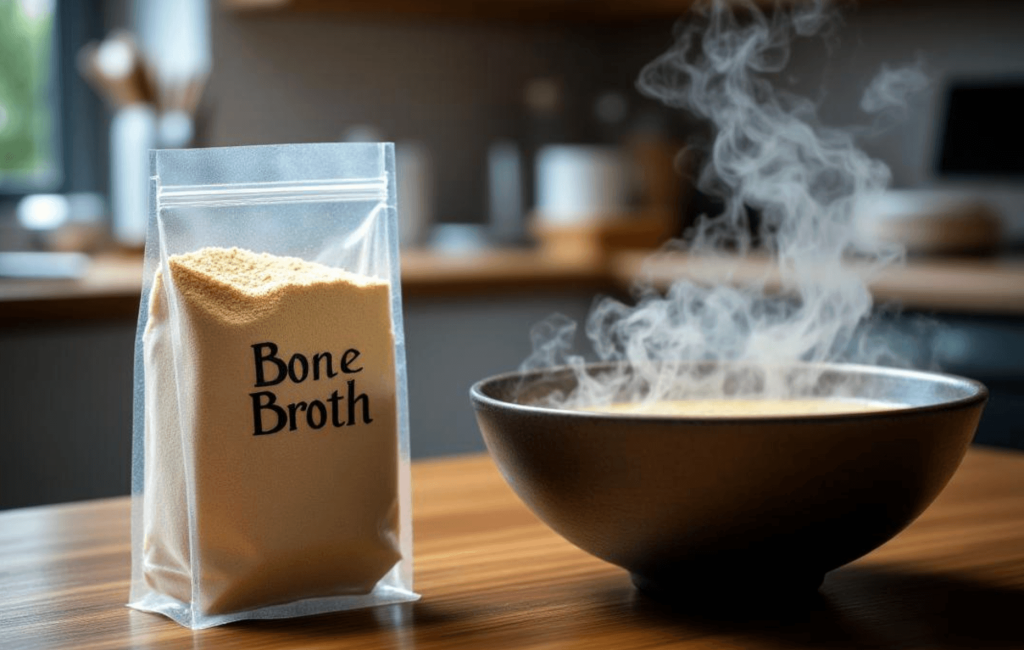
Bone broth powder is dehydrated liquid bone broth that you mix with hot water to drink. It is made by simmering bones and connective tissue, then removing the water to create a shelf-stable powder.
This answers the question what is bone broth powder. In a bone broth powder vs liquid comparison, the main difference is format, not the original source.
Not all powders are the same, and the ingredient list matters.
Bone broth powder is also not the same as collagen powder. Collagen supplements usually contain isolated proteins, while bone broth powder reflects a broader nutrient profile from the original broth.
Formulation varies by product. Some powders are simple and clean, while others include added ingredients such as:
- Maltodextrin
- "Natural flavors"
- Anti-caking agents
A short ingredient list is usually a good sign. When people ask is bone broth powder the same as bone broth, the answer is that it comes from liquid broth, but how close it is depends on how it is made.
Nutritional Comparison — Powder vs Liquid
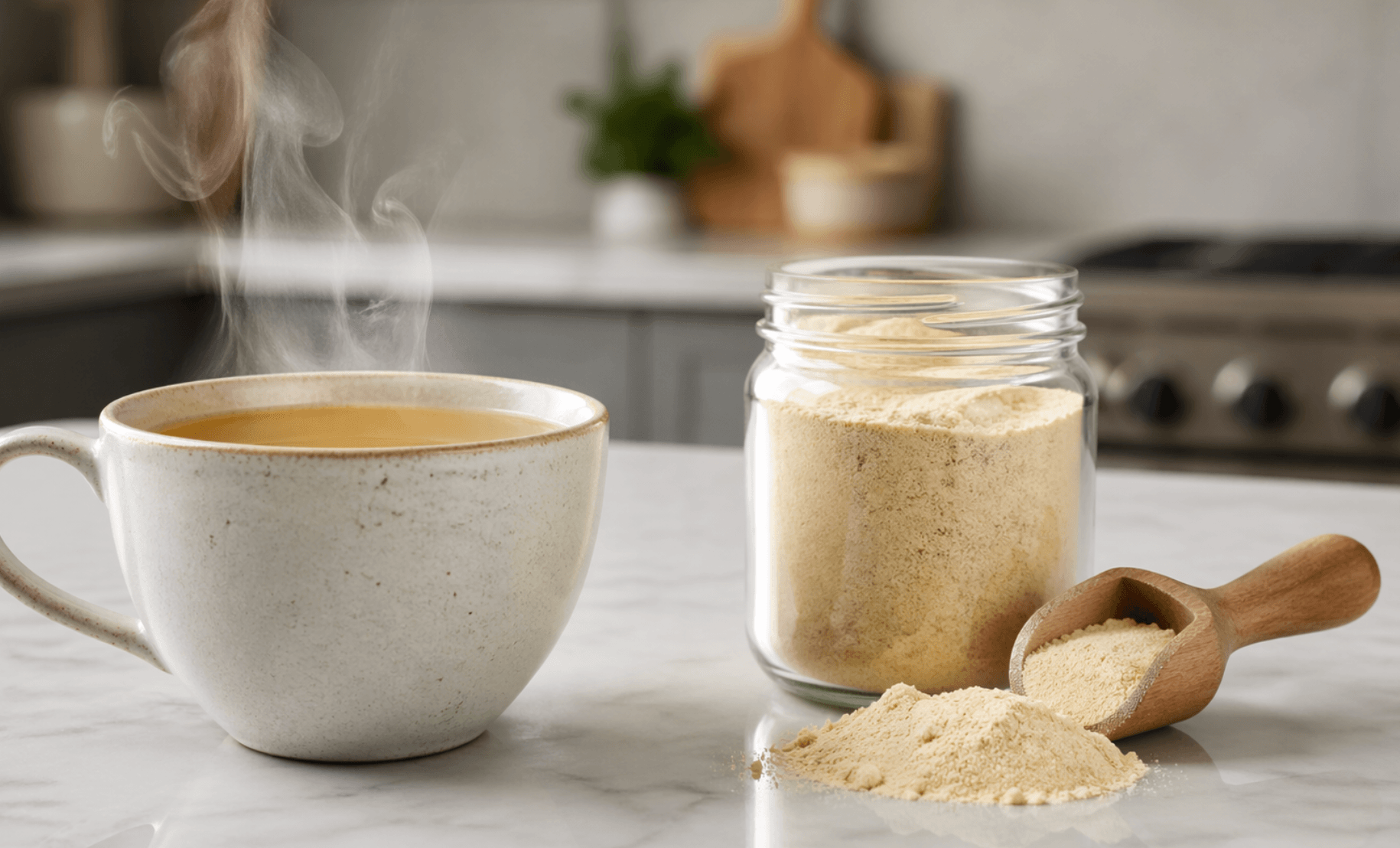
Most people want a clear answer: is powdered bone broth as good as liquid? In most cases, no. Liquid bone broth tends to provide a more complete nutritional profile, especially for gut-supporting compounds.
Protein and Collagen Content
Liquid bone broth typically provides about 6–10g of protein per cup, depending on how it is made. Powder can match or exceed that, but it varies widely based on concentration and serving size.
There is also a difference between collagen and gelatin. Liquid broth retains more intact gelatin from slow simmering, while powder often contains collagen peptides in a more processed form. Both provide protein, but they are not identical in structure.
Bioavailability and Gut Support
In a bone broth liquid vs powder comparison, liquid usually has an edge for gut-focused use.
Traditional liquid broth contains naturally occurring gelatin and amino acids such as glycine from long simmering. These are associated with supporting the digestive lining. Powder still provides collagen and protein, but it may not retain the same full broth profile depending on how it is processed.
Sodium and Additives
Sodium levels vary in both formats, but liquid bone broth often ranges from about 300 to 600 mg per serving.
Powder is more likely to include added ingredients such as anti-caking agents or flavor enhancers. This is not always an issue, but it makes label reading important.
A simple rule: the ingredient list is your quickest quality check. Fewer and more recognizable ingredients usually indicate a better product.
Convenience and Preparation
In a bone broth powder vs liquid comparison, convenience is often the deciding factor.
Powder is built for convenience. It is shelf-stable, easy to store, and does not require refrigeration. You can mix it with hot water in about 30 seconds, which makes it practical for work, travel, or quick use between meals.
Liquid bone broth is ready to heat and drink, but it requires storage. Once opened, it needs refrigeration, and heating usually takes 2 to 5 minutes. It is less portable but easier to use at home.
In day-to-day use:
- Powder works best for portability and speed
- Liquid works better for at-home use and a ready-to-drink option
Taste and Texture
Taste and texture often determine which option you will use consistently.
Liquid bone broth is usually richer and more satisfying. It has a fuller texture and a flavor closer to homemade broth when properly prepared.
Powder varies more by product. Some taste decent, while others can be thin or slightly chalky depending on quality and how they are mixed.
To improve powder:
- Use hot water so it dissolves properly
- Add a pinch of salt if the flavor is flat
- Use it in soups, sauces, or recipes instead of drinking it plain
Cost Comparison
Powder is usually cheaper per serving, often around 1 to 2 dollars depending on the brand and formulation. However, quality varies, and some products may be more diluted or include added ingredients.
Liquid bone broth typically costs around 3 to 6 dollars per serving, especially for well-sourced options. It is generally more consistent in ingredients and preparation.
The key is not just price, but overall value. A lower-cost option may not provide the same nutritional profile if the quality is lower.
In practice, check:
- Ingredient list length and clarity
- Source of bones, such as grass-fed or pasture-raised
- Protein content per serving
Quick Comparison Table
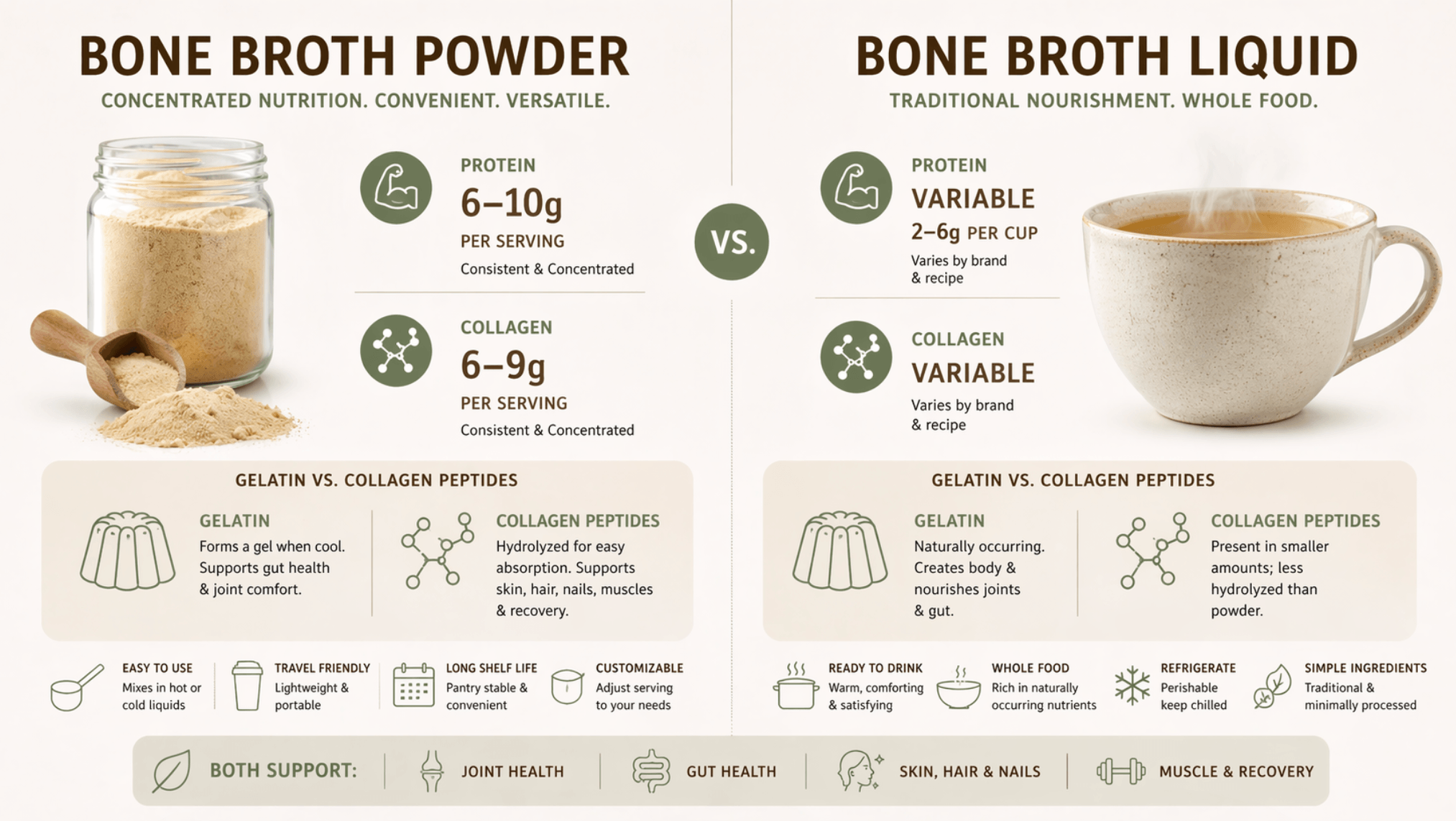
Here's how it all comes together at a glance:
| Factor | Powder | Liquid |
|---|---|---|
| Protein consistency | Varies by brand and formulation | More consistent (about 6–10g per cup) |
| Shelf life | Long, no refrigeration needed | Shorter, requires refrigeration after opening |
| Taste | Can be thin or slightly chalky | Richer, closer to homemade broth |
| Convenience | Mixes in about 30 seconds | Heat and drink in 2–5 minutes |
| Best for | Travel, quick use, recipes | Daily sipping, cooking, routine use |
Which One Is Right for You?
Bone broth powder and liquid are not interchangeable. The right choice depends on how you use it day to day.
Choose Powder If:
- You need something portable for work, travel, or busy schedules
- You want a shelf-stable option with no refrigeration
- You plan to mix it into smoothies, coffee, or recipes
- You want a quick protein add-on
Choose Liquid If:
- You drink bone broth regularly as a warm beverage
- You prefer traditional slow-simmered preparation
- You use it for cooking, such as soups, grains, or sauces
- You care about taste and texture
The Balanced Take
In a bone broth powder vs liquid comparison, neither option is universally better.
If you are asking is powdered bone broth as good as liquid, the answer depends on your priorities. Powder is more convenient and easier to store. Liquid is less processed and more consistent in preparation.
A simple way to approach it:
- Use powder for flexibility and speed
- Use liquid for consistency and a more traditional result
Many people use both, depending on the situation.
What matters most is quality and consistency. Choose a product with simple ingredients and use it in a way that fits your routine.
Frequently Asked Questions
Is bone broth powder as good as liquid bone broth?
No, bone broth powder is not the same as liquid bone broth, but it can be a practical alternative. Powder is convenient and shelf-stable, while liquid bone broth typically retains more gelatin and amino acids such as glycine from slow simmering. High-quality powder made from grass-fed sources can still provide protein and collagen, but liquid broth is generally closer to traditional bone broth nutrition.
What is bone broth powder made from?
Bone broth powder is made by dehydrating and concentrating liquid bone broth into a shelf-stable powder. It starts with simmering bones and connective tissue to create liquid broth, then removing the water. The powder is reconstituted with hot water to make a drinkable broth. Quality varies, so look for products made from well-sourced bones, such as grass-fed or pasture-raised, with no added fillers or artificial flavors.
Does bone broth powder have collagen?
Yes, bone broth powder contains collagen peptides derived from bones and connective tissue. However, the dehydration process can reduce the amount of intact gelatin compared to liquid bone broth. Liquid broth typically contains more gelatin from slow simmering, which is why it thickens when cooled.
Which is better for gut health — bone broth powder or liquid?
Liquid bone broth is generally better for gut health because it retains more gelatin and amino acids such as glycine from slow simmering. These compounds are associated with supporting the gut lining. Bone broth powder can still provide protein and collagen, especially when made from high-quality sources, but liquid is the stronger option for gut-focused use.
Can I use bone broth powder in cooking the same way as liquid?
Yes, bone broth powder can be used in place of liquid broth when mixed with water. It works well in soups, sauces, grains, and other recipes. It can also be used as a dry seasoning in some cases. Since concentration and sodium levels vary by product, adjust salt as needed.
Conclusion
The bone broth powder vs liquid decision comes down to what fits your routine, goals, and budget. Neither option is universally better. Each works differently depending on how you plan to use it day to day.
Focus on quality first. Check the ingredient list and sourcing, whether you choose powder or liquid. Products made from well-sourced bones with simple ingredients are usually the better option.
Start with what feels practical and adjust as needed. What matters most is using it consistently over time.