
Introduction
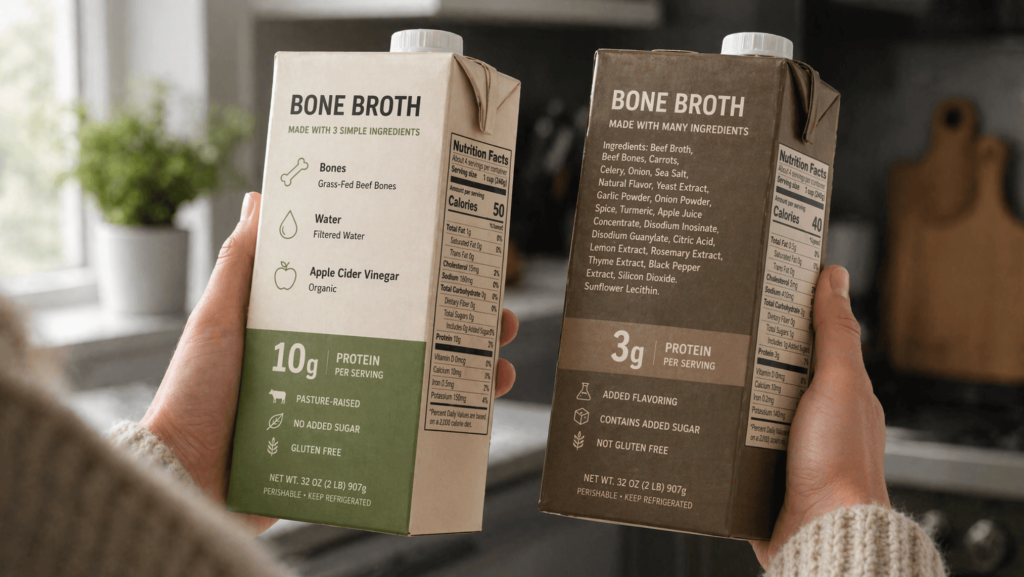
The bone broth market looks simple until you check the label. One product shows 10 grams of protein, another shows 3g. Some list only bones and water, while others include added flavors and fillers. This is why finding the best bone broth brands is not about marketing claims like "collagen-rich" or "gut-healing." It comes down to ingredients, sourcing, and nutritional content.
The best bone broth brands are the ones with simple ingredients, clear sourcing, and enough protein to reflect proper preparation.
This guide explains what to look for, then applies those criteria to common options so you can choose with clarity.
What Makes a Good Bone Broth Brand?
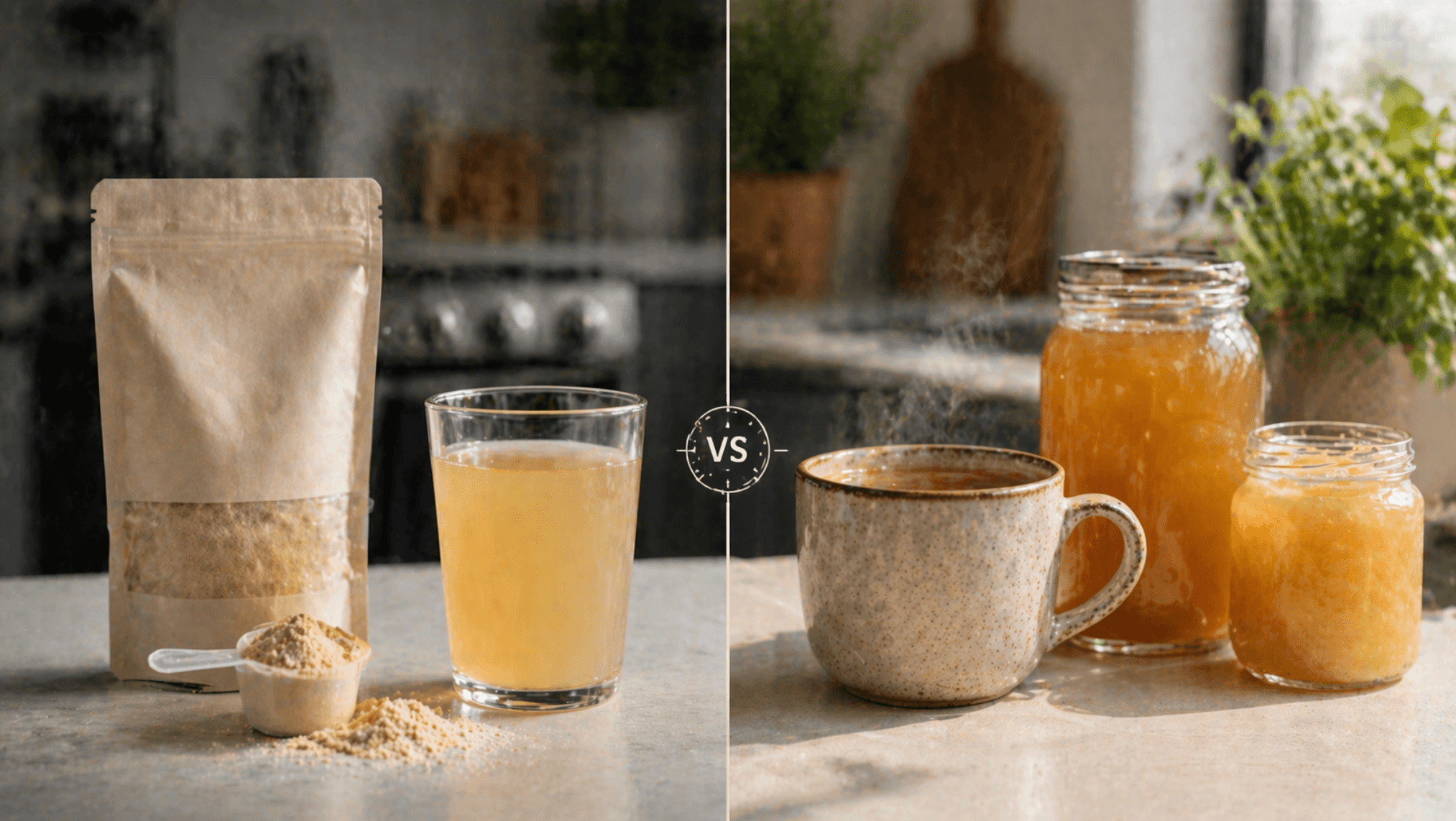
The best bone broth brands are defined by a few clear factors: sourcing, ingredients, protein content, sodium levels, and transparency.
Start with sourcing.
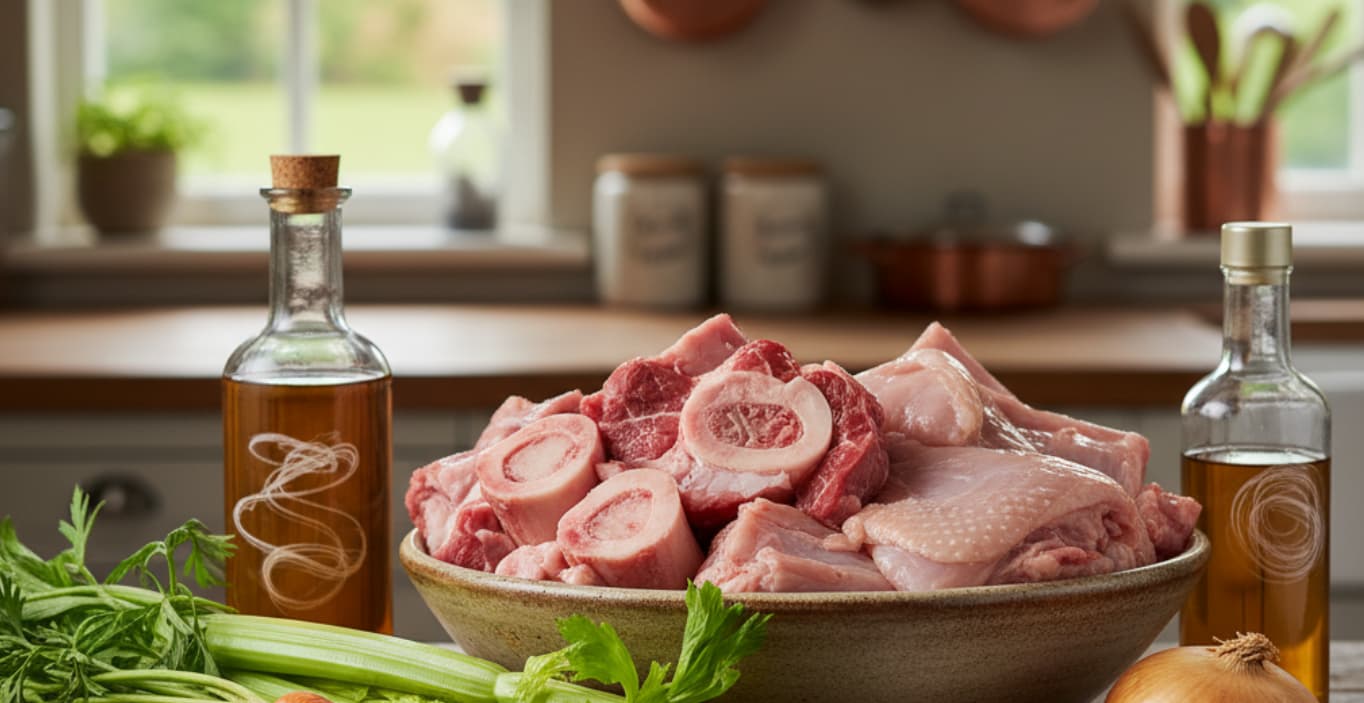
For beef, look for grass-fed and ideally grass-fed and finished. For chicken, pasture-raised or free-range is a good baseline. This affects fat quality and the consistency of the bones used for slow simmering.
Next, check the ingredients.
A clean broth usually includes:
- Bones
- Water
- A small amount of apple cider vinegar
This is the standard for proper extraction. Added ingredients such as natural flavors, yeast extract, carrageenan, or starch are signs of a more processed product.
Then look at protein and sodium.
- Aim for 8 to 10 grams of protein per 8 oz serving
- Around 300 to 500 mg of sodium is typical
If protein drops below about 6 grams, the broth is often diluted.
Finally, check transparency.
The best bone broth brand will clearly state where the bones come from and how the broth is made. If sourcing is unclear, quality is harder to verify.
Ingredients That Should (and Shouldn't) Be There
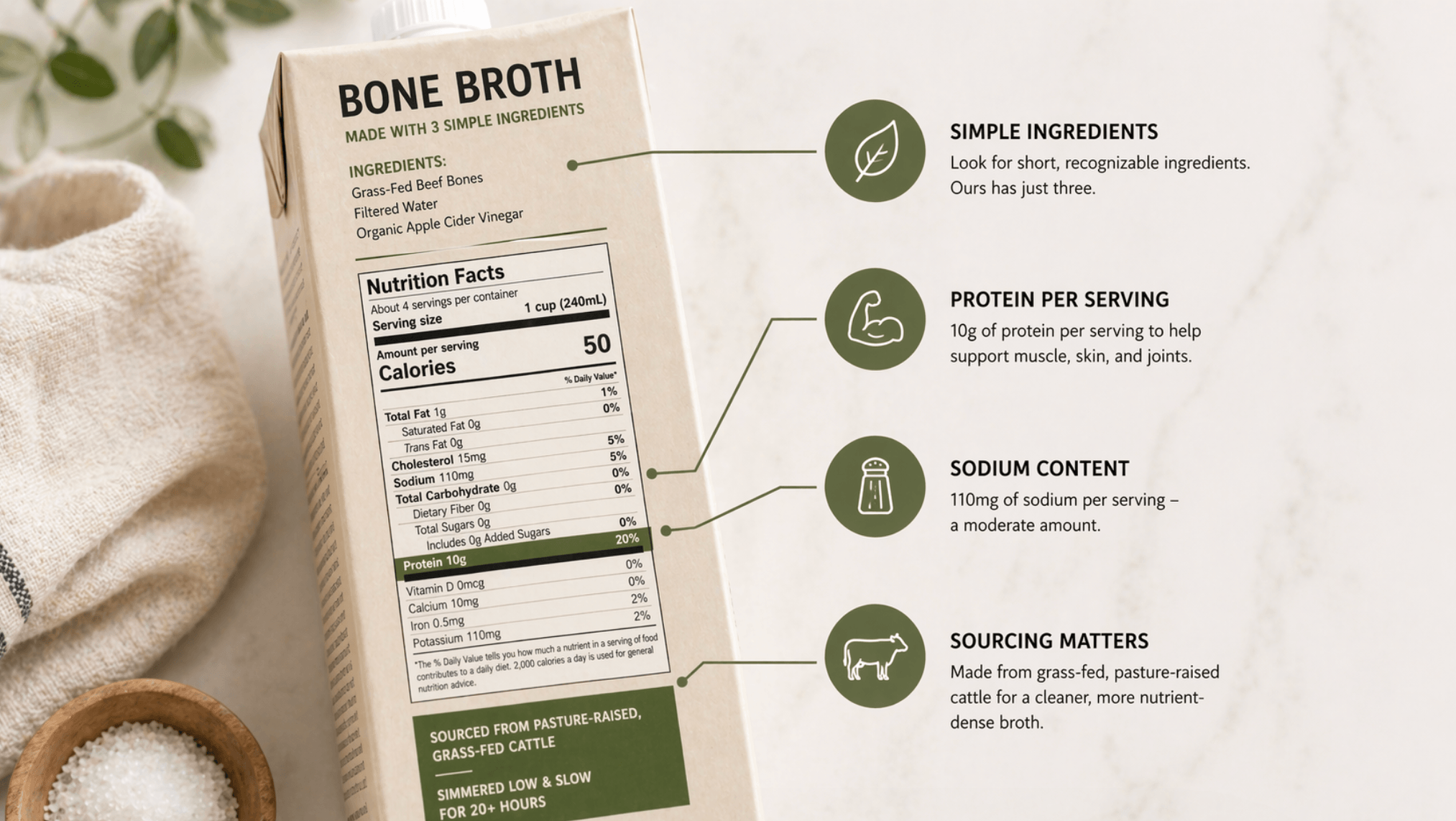
A quick label scan tells you a lot.
A strong product looks like: "Beef bones, water, apple cider vinegar"
A weaker one often includes:
- Natural flavors
- Yeast extract
- Carrageenan
- Starch or thickeners
These ingredients are not always harmful, but they often indicate the broth was not concentrated enough on its own. If you are comparing the best store bought bone broth brands, this is one of the fastest ways to filter options.
Why Protein and Sodium Tell You More Than Marketing Claims
Protein is one of the simplest ways to estimate how concentrated a broth is. Most of that protein comes from collagen released during long simmering.
- 8 to 10 grams per serving means the broth is well extracted
- Below 6 grams often means it is diluted
Sodium adds context. Some products use more salt to improve flavor in a weaker broth. The goal is balance. Look for solid protein with moderate sodium levels. This applies whether you are comparing the best beef bone broth brands or lighter chicken options.
How to Read a Bone Broth Label
Reading a label is the fastest way to assess quality. The best bone broth brands are clear and consistent across a few key areas.
Start with this order:
- Ingredients
- Protein per serving
- Sodium
- Sourcing details
A clean label is simple and transparent. A padded label often relies on added flavors, vague claims, or unclear sourcing. If a brand clearly states where the bones come from, that is a strong signal. If it relies on general marketing language, it is worth checking more closely.
The Gel Test (Quick Check at Home)
Real bone broth often gels when refrigerated. This happens because of the gelatin released from collagen during long simmering. If the broth firms up in the fridge, it is a good sign. If it stays thin, it may be diluted or not cooked long enough. This is not a perfect test, but it can help confirm quality.
Serving Size Tricks Brands Use
Labels are not always easy to compare. Some brands use larger serving sizes, such as 12 oz instead of 8 oz, which makes protein numbers look higher.
To compare fairly:
- Standardize to an 8 oz serving
- Check protein and sodium based on that size
For value, divide the total price by the number of servings. This gives you a clearer cost per serving when comparing the best brands of bone broth.
Best Beef Bone Broth Brands
These are a few widely available options evaluated using the same criteria: sourcing, ingredients, protein, sodium, and overall value. This helps compare the best beef bone broth brands without relying on marketing claims.
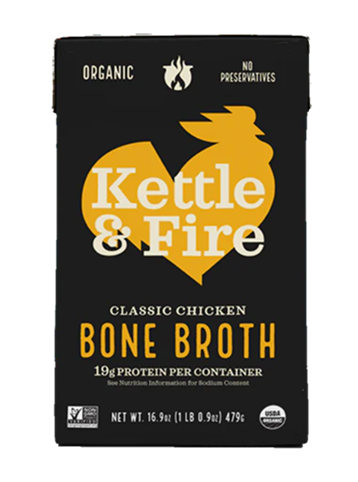
Kettle & Fire
- Sourcing: Grass-fed beef
- Ingredients: Clean and minimal
- Protein and Sodium: Moderate protein, moderate sodium
- What it does well: Easy to find, shelf-stable, and consistent. A practical option if you are new to bone broth.
- Where it falls short: Protein is often in the 6 to 8 gram range, which is lower than more concentrated options.
Bare Bones
- Sourcing: Grass-fed
- Ingredients: Generally clean
- Protein and Sodium: Often higher protein, higher sodium
- What it does well: Stronger protein content compared to many shelf-stable products.
- Where it falls short: Sodium levels can be higher, which may not suit lower-sodium preferences.
Bonafide Provisions
- Sourcing: Pasture-raised, high transparency
- Ingredients: Very minimal
- Protein and Sodium: Strong protein levels
- What it does well: Sold frozen and minimally processed, often closer to homemade in texture and consistency.
- Where it falls short: Less convenient and usually more expensive per serving.
Brodo
- Sourcing: High-quality, chef-driven sourcing
- Ingredients: Clean
- Protein and Sodium: Varies by product
- What it does well: Strong flavor and careful preparation.
- Where it falls short: Typically priced higher than most store-bought options.
Best Chicken Bone Broth Brands
Chicken bone broth is typically lighter in flavor and lower in collagen than beef. This affects protein levels, but it can be easier to use in everyday cooking. When comparing the best chicken bone broth brands, apply the same criteria: sourcing, ingredients, protein, sodium, and value.
Kettle & Fire (Chicken)
- Sourcing: Chicken bones, sourcing varies by product
- Ingredients: Clean and minimal
- Protein and Sodium: Lower protein than beef, moderate sodium
- What it does well: Accessible, consistent, and widely available.
- Where it falls short: Protein is usually lower than beef options, often below the 8 gram benchmark.
Bonafide Provisions (Chicken)
- Sourcing: Pasture-raised, transparent sourcing
- Ingredients: Very minimal
- Protein and Sodium: Higher protein for chicken, moderate sodium
- What it does well: Sold frozen and minimally processed, often closer to homemade in texture and consistency.
- Where it falls short: Requires freezer storage and may be harder to find depending on location.
Trader Joe's
- Sourcing: Limited sourcing detail
- Ingredients: Generally simple
- Protein and Sodium: Lower protein, moderate sodium
- What it does well: Easy to find and budget-friendly, making it one of the more accessible best store bought bone broth brands.
- Where it falls short: Protein is often below 8 grams per serving, which suggests a less concentrated broth.
Best Bone Broth Powder Brands
Bone broth powders are convenient, but ingredient quality matters more. Processing and formulation vary widely, so label checks are critical when comparing the best bone broth brands in powder form.
Paleovalley
- Sourcing: Grass-fed
- Ingredients: Simple, fewer additives than most powders
- Protein and Sodium: Moderate protein per serving after mixing
- What it does well: Clean formulation compared to many powders, with a focus on minimal ingredients.
- Where it falls short: Flavor can be mild compared to liquid broth.
Ancient Nutrition
- Sourcing: Varies by product
- Ingredients: More complex formulas in some versions
- Protein and Sodium: Moderate protein, varies by product
- What it does well: Widely available with multiple flavor options.
- Where it falls short: Some products include additional ingredients beyond basic broth components.
Further Food
- Sourcing: Grass-fed
- Ingredients: Generally minimal
- Protein and Sodium: Moderate protein, varies by serving
- What it does well: Focus on clean sourcing and simpler ingredient lists.
- Where it falls short: Price per serving can be higher than average.
What to Watch With Powders
- Check protein after mixing, not just per scoop
- Look for added gums, sweeteners, or flavoring agents
- Review ingredient lists closely, as powders are more likely to include fillers
Best Low-Sodium Bone Broth Brands
If you are managing sodium intake, this is an important category when comparing the best bone broth brands.
- Standard broths typically contain about 300 to 500 mg of sodium per serving
- Low-sodium options are usually under 140 mg per serving
Some of the best low sodium bone broth brands offer reduced-sodium or unsalted versions. These give you more control, especially if you are using broth daily. The tradeoff is flavor. Lower sodium broths may taste mild, so you may need to season them yourself depending on how you use them.
Homemade broth remains the lowest-sodium option if you want full control over ingredients and salt levels.
Frequently Asked Questions
What is the best bone broth brand to buy?
The best bone broth brand to buy uses grass-fed or pasture-raised bones, has at least 8 grams of protein per serving, and contains a short ingredient list. Strong options include Kettle & Fire, Bare Bones, and Bonafide Provisions. When comparing the best bone broth brands, focus on sourcing, protein content, and ingredient quality.
What should I look for on a bone broth label?
Look for bones listed as the first ingredient, grass-fed or pasture-raised sourcing, at least 8 grams of protein per serving, and sodium under 500 mg. Avoid added ingredients such as natural flavors, yeast extract, starch, or carrageenan. A short ingredient list is a strong quality signal. A quality liquid broth often gels when chilled, which indicates real gelatin.
Is store-bought bone broth as good as homemade?
High-quality store-bought bone broth can be close to homemade if it is properly made. The difference is control. Homemade broth allows full control over ingredients and simmer time. Store-bought options vary, so quality depends on the brand. When comparing the best store bought bone broth brands, look for slow-simmered broth with clear protein content and minimal ingredients.
How much protein should bone broth have per serving?
A quality liquid bone broth should have 8 to 10 grams of protein per 8 oz serving. Anything below 6 grams often indicates a diluted broth. Bone broth powder varies more, so check protein based on the fully mixed serving.
What is the difference between bone broth and regular broth?
Bone broth is simmered longer and contains more collagen and protein than regular broth. Regular broth is cooked for a shorter time using meat and vegetables. Bone broth is simmered for 12 to 24 hours using bones and connective tissue, which allows collagen and gelatin to be extracted.
Conclusion
Choosing the best bone broth brands comes down to a few key checks. Look for grass-fed or pasture-raised sourcing, a short ingredient list, at least 8 grams of protein per serving, and moderate sodium levels. Prioritize brands that are transparent about where their bones come from and how the broth is made.
Use this as a simple checklist each time you shop. The best bone broth brand is the one that meets these standards consistently within your budget.