

Introduction
Irritable bowel syndrome (IBS) is a digestive condition that affects how your gut works, not its structure. Symptoms can vary widely from person to person. Some people deal with bloating and discomfort, others with diarrhea or constipation, and many experience a mix of both.
That is why questions like is bone broth good for IBS do not have a simple yes or no answer. Bone broth is often recommended for gut health, but when it comes to bone broth for IBS, results depend on your specific triggers and tolerance.
This article explains how bone broth and IBS interact, where it may help, where it can cause issues, and what IBS-specific factors to consider before adding it to your routine.
Why Bone Broth Is Often Recommended for Gut Health
Bone broth is often recommended for gut health for a few practical reasons.
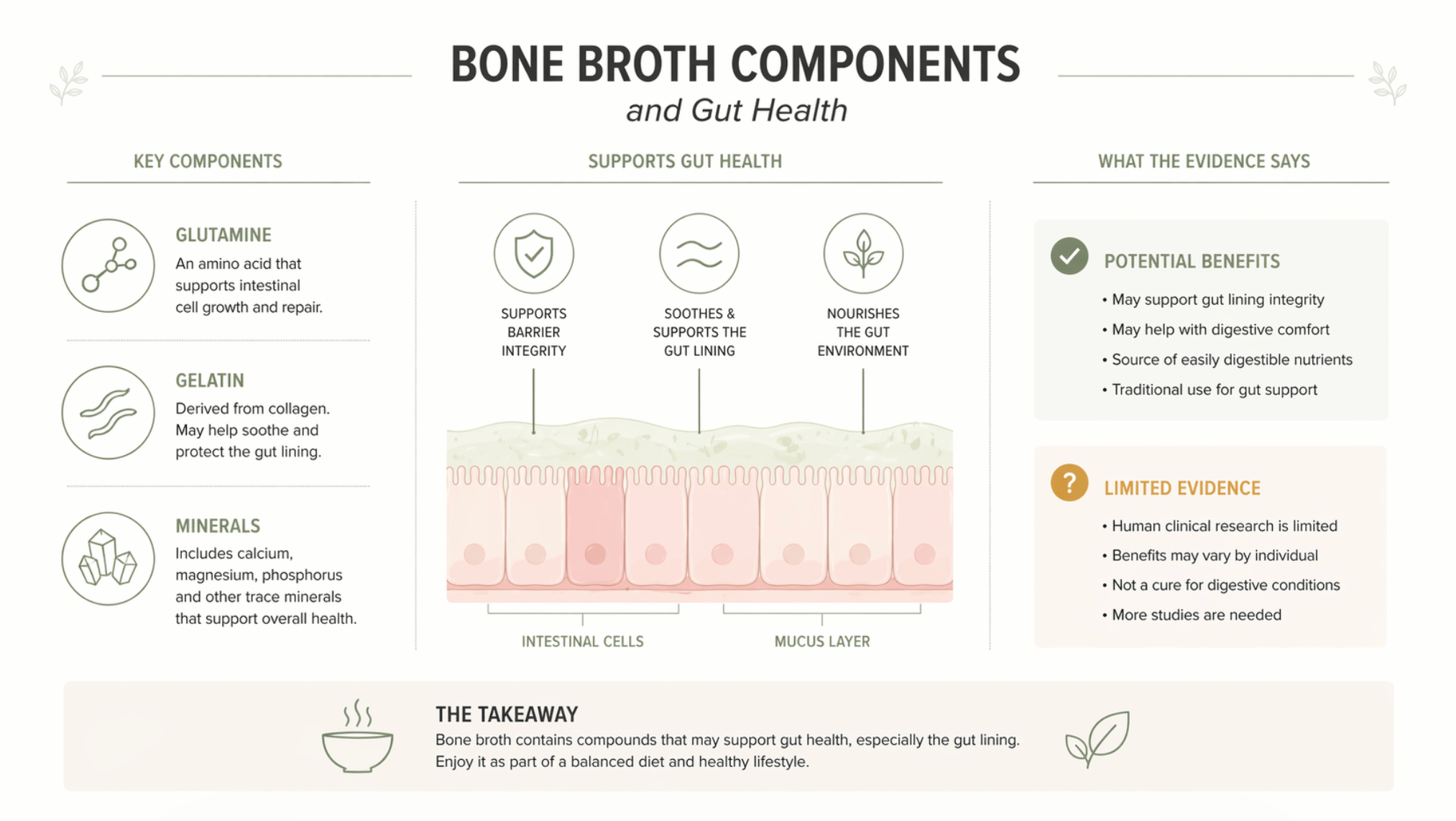
First, it contains gelatin and amino acids such as glycine, which may help support the gut lining. It also provides glutamine, which intestinal cells use as fuel. This is one reason people use bone broth for digestive issues, especially when digestion feels sensitive.
Second, it is easy to digest. As a liquid, bone broth places less strain on the gut compared to solid food. For some people, this makes it easier to tolerate during periods of discomfort or when dealing with bone broth and bloating.
Bone broth is also cooked differently from regular broth. It is simmered for longer, often 12 to 24 hours, which extracts more collagen and gelatin. Regular broth, including standard chicken broth, is cooked for a shorter time and contains less of these compounds. This difference is why people asking is chicken broth good for IBS may notice different effects.
These factors explain why bone broth is commonly recommended for gut health, but results still depend on individual tolerance.
What the Research Actually Says About Bone Broth and IBS
There is limited direct research on bone broth for IBS. Most evidence focuses on individual nutrients found in bone broth rather than the broth itself.
For example, glutamine has been studied for its role in supporting gut barrier function, particularly in people with intestinal permeability. Gelatin and amino acids such as glycine are also linked to digestive support in general nutrition research. However, these findings do not directly confirm the effects of bone broth on IBS symptoms.
This is why most clinical and medical sources take a cautious position. Bone broth is not proven to treat or cure IBS. At best, it may support digestion for some people, depending on tolerance and overall diet.
In practice, some people report that bone broth and IBS work well together, especially during periods of sensitive digestion. Others may experience symptoms such as bone broth and bloating, particularly if they are sensitive to histamine or certain ingredients.
Because of this, the most accurate approach is practical rather than absolute. Bone broth may help in some cases, but it is not a guaranteed solution, and individual response matters.
When Bone Broth May Help With IBS
Bone broth may help in specific situations, especially when digestion is more sensitive. It is not a universal solution, but it can be useful in the right context.
During IBS-D or Flare-Ups
If you have diarrhea-predominant IBS, simple liquids are often easier to tolerate during flare-ups. In this case, bone broth for IBS flare up situations can be a practical option when solid food feels too heavy. It provides light nourishment without adding bulk.
During Low-Residue Periods
When digestion feels overwhelmed, some people reduce fiber and switch to low-residue foods. Bone broth fits this approach because it is easy to digest. A small serving, such as 4 to 6 oz sipped slowly, can provide nutrients without putting extra strain on the gut.
Gut Barrier Support
Bone broth contains gelatin and amino acids such as glutamine. These are linked to gut lining support in nutrition research. This is one reason it comes up in bone broth for digestive issues discussions. However, the effect varies and is not guaranteed.
Hydration Support
During a flare, appetite often drops. Bone broth can help maintain fluid intake while providing small amounts of electrolytes. This can support overall comfort when eating less than usual.
When Bone Broth May Not Help — Or Could Trigger Symptoms
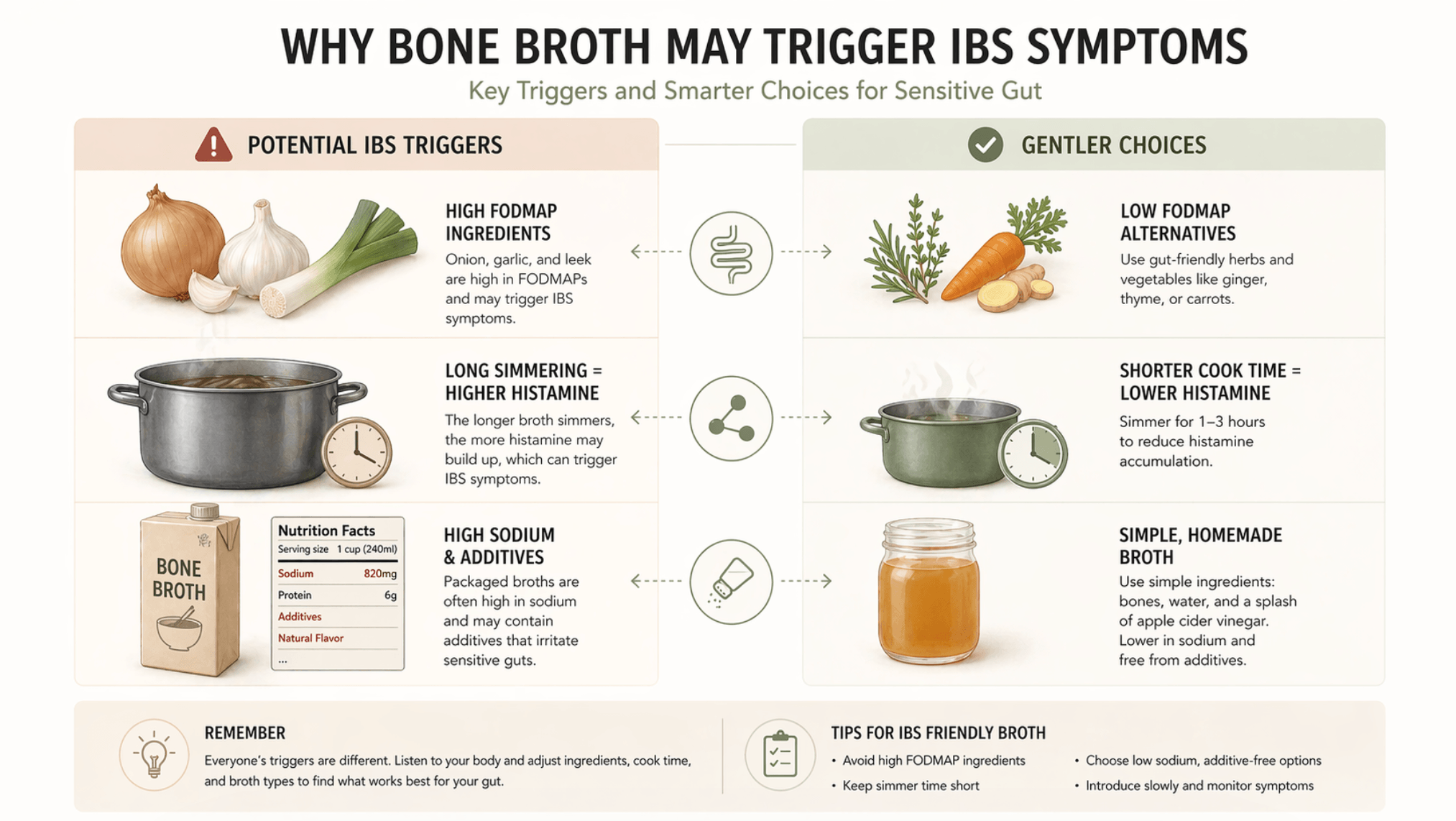
Bone broth is not always well tolerated with IBS. In some cases, it can make symptoms worse depending on how it is made and what it contains.
Histamine Sensitivity
Bone broth is often simmered for many hours, which can increase histamine levels. Histamine is a natural compound, but some people with IBS or sensitive digestion may not tolerate it well. This can lead to symptoms such as bone broth and bloating, discomfort, or changes in digestion.
FODMAP Ingredients
Many store-bought broths include onion, garlic, or leek. These are high in FODMAPs and can trigger symptoms in people following a low-FODMAP approach. This is a common reason why bone broth and IBS do not always work well together.
Sodium Content
Packaged broths can be high in sodium. While sodium itself is not a direct IBS trigger, higher amounts may contribute to bloating or fluid retention in some people.
Additives and Flavorings
Ingredients such as natural flavors, yeast extract, or thickeners are common in commercial broths. These are not always well tolerated by people with sensitive digestion and may contribute to symptoms.
Homemade vs Store-Bought
Homemade broth gives you more control over ingredients and cooking time. Shorter cooking times may result in lower histamine levels compared to long-simmered or shelf-stable products. Store-bought options vary widely, so label reading matters.
Bone broth can work well for some people, but these factors explain why it can also trigger symptoms. Individual tolerance plays a key role.
How to Try Bone Broth With IBS (Without Making Symptoms Worse)
If you want to test bone broth for IBS, keep it simple and controlled.
- Start small. Begin with around 4 oz and wait at least 24 hours before increasing. This helps you see how your body responds without adding too many variables at once.
- Choose your broth carefully. Look for a short ingredient list, low sodium, and no added onion or garlic. Simpler options are easier to tolerate when testing.
- Pick the right type. Many people find chicken easier to tolerate than beef. If you are asking is chicken broth good for IBS, it is often a practical place to start.
- Time it right. Try it on a stable day, not during a severe flare, so you can better isolate its effects.
- Track your response. Note symptoms like bone broth and bloating, stool changes, or discomfort. This helps you decide if bone broth fits your routine.
Frequently Asked Questions
Is bone broth good for IBS?
Bone broth may help some people with IBS because it contains gelatin and amino acids that are easy to digest and support the gut lining. However, it is not tolerated by everyone. It can trigger symptoms if you are sensitive to histamine or FODMAP ingredients like onion and garlic. Start with about 4 oz and monitor your response over 24 hours.
Can bone broth cause IBS flare-ups?
Yes, bone broth can cause flare-ups in some people. Long-simmered broth is higher in histamine, which may trigger symptoms in sensitive individuals. Store-bought broths may also contain onion, garlic, or additives that can cause issues. Choose a plain, additive-free option and start with a small serving.
Is chicken broth or beef bone broth better for IBS?
Chicken bone broth is generally better tolerated because it is lighter and easier to digest. Beef bone broth is richer and higher in collagen, but it may trigger symptoms in some people, especially those sensitive to histamine. Try small amounts, around 4 to 6 oz, on separate days and compare your response.
How do I use bone broth during an IBS flare?
During a flare, plain bone broth can be a soothing and easy-to-digest option. Choose a low-sodium broth with no added onion, garlic, or additives. Start with 4 to 6 oz, sip slowly, and monitor your response over 24 hours to see how your body reacts.
Does bone broth help with bloating from IBS?
Bone broth and bloating can go either way, depending on the cause. Some people find it helps when digestion feels sensitive, while others may experience more bloating, especially with high sodium or FODMAP ingredients. Choose a simple broth with a short ingredient list and test a small portion first.
Conclusion
Bone broth for IBS can be helpful for some people, but it is not always well tolerated. The outcome depends on how it is made, how you introduce it, and how your body responds. Start with a small amount and choose a simple, additive-free option.
If symptoms worsen, histamine sensitivity or FODMAP ingredients may be the cause. Bone broth can be one useful tool, but it is not a complete solution. If IBS symptoms are ongoing or severe, consider working with a qualified dietitian.