
Introduction
If you have looked at bone broth options, you have likely seen grass fed bone broth on many labels, often at a higher price. This raises a simple question: is grass fed bone broth good for you, or is it just marketing?
Grass fed bone broth can offer higher-quality sourcing, but the benefit depends on how the animal was raised and how the broth is made.
Bone broth is made by slowly simmering bones and connective tissue to release collagen, amino acids, and minerals into a liquid. The quality of those bones matters. What the animal eats and how it is raised can affect the composition of the final broth.
This guide explains what grass fed means in the context of bone broth, how it can affect nutrition, and what to look for when choosing a product.
What Does "Grass-Fed" Mean for Bone Broth?
"Grass-fed" refers to what the animal was fed, but the term is not always consistent across products. Some cattle labeled as grass-fed may start on pasture and later be finished on grain. That is why you may also see the label "grass-fed and finished."
Grass-Fed vs Grass-Fed and Finished
This distinction matters when choosing grass fed bone broth.
Grass-fed and finished means the animal stayed on a pasture-based diet for its entire life. This results in more consistent fat composition and more predictable raw materials for broth. In contrast, grass-fed alone does not always guarantee a fully pasture-based diet.
Grass-Fed vs Organic
It is also important to separate grass-fed from organic.
Organic grass fed bone broth means the animal was raised without synthetic pesticides, antibiotics, or added hormones. However, organic certification does not require a fully grass-based diet. The two labels can overlap, but they are not interchangeable.
Why This Matters for Bone Broth
Bone broth is made from bones, marrow, and connective tissue. The quality of these parts depends on how the animal was raised.
Diet and environment can influence collagen content, fat composition, and trace minerals. These factors affect the final nutritional profile and overall quality of grass fed beef bone broth and similar products.
Nutritional Differences — Grass-Fed vs Conventional
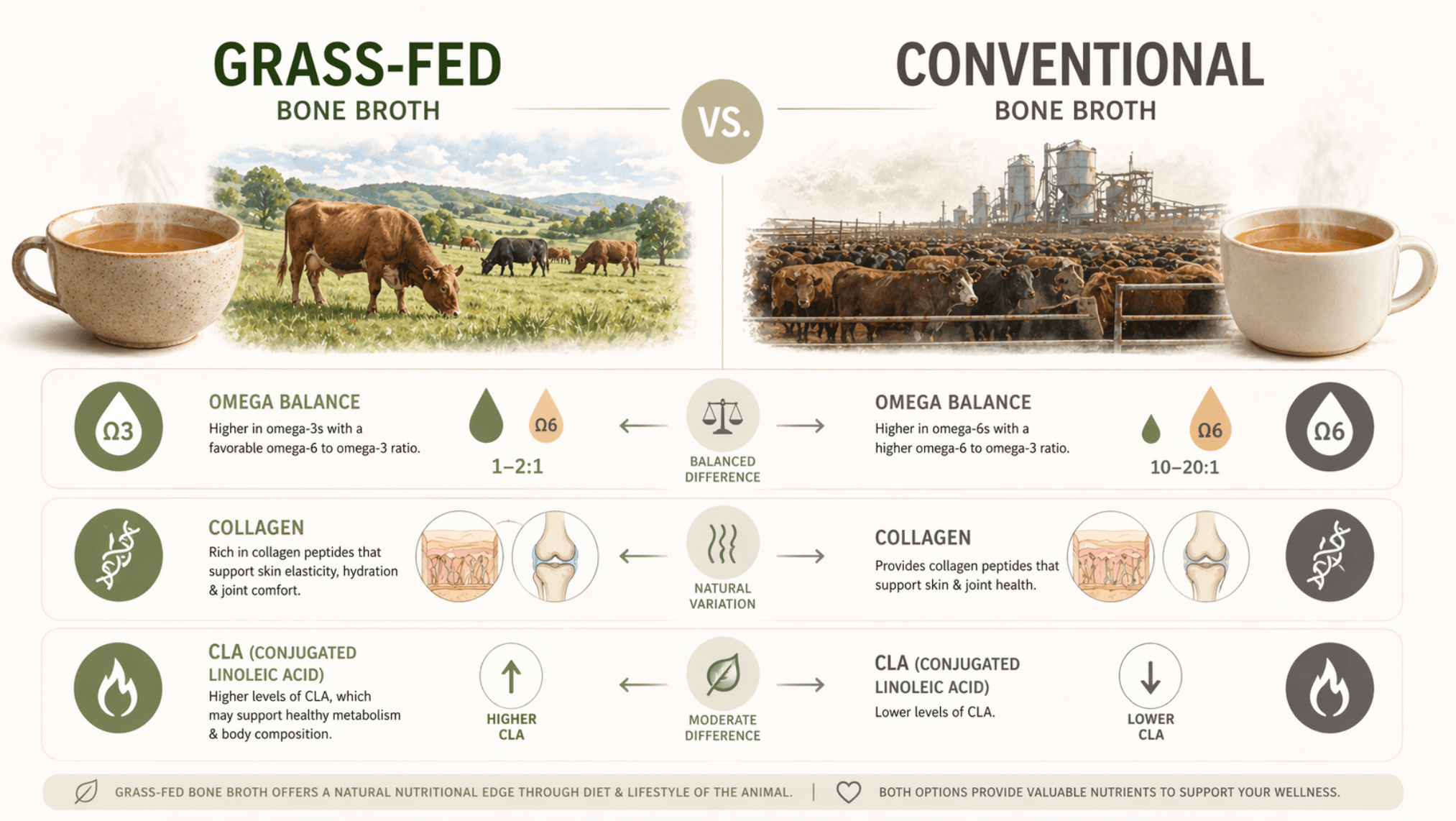
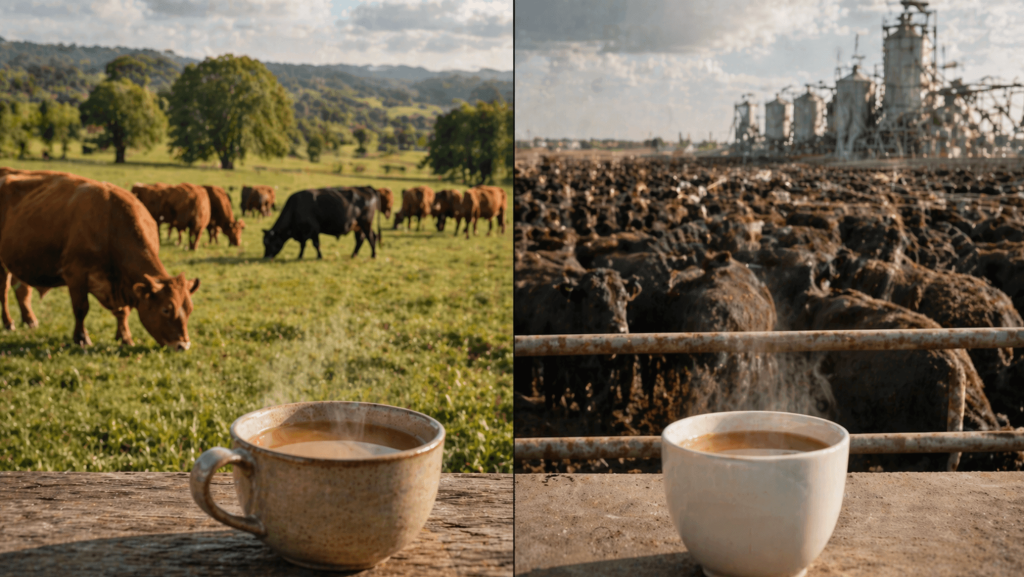
The nutritional differences between conventional and grass fed bone broth are real, but they are not extreme. They show up in a few key areas:
- Fat balance: Grass-fed bones can produce broth with a higher omega-3 to omega-6 ratio. Most diets are already high in omega-6 fats, so a better balance can support overall dietary balance over time. The difference in broth is modest, but it reflects how the animal was raised.
- Conjugated linoleic acid (CLA): Pasture-raised animals tend to contain more CLA, a naturally occurring fatty acid linked to metabolic and immune function. Bone broth is not a major source, but it contributes to the overall profile of grass fed beef bone broth.
- Collagen quality: Animals that move more and live on pasture develop stronger connective tissue. This can support more consistent collagen extraction during slow simmering, which is one reason grass fed beef bone broth benefits are often associated with joint and skin support.
- Exposure and sourcing: Grass-fed systems often involve fewer antibiotics and added hormones compared to intensive feedlot systems. This does not mean all conventional products are the same, but sourcing can affect consistency and overall quality.
If you use bone broth occasionally in cooking, these differences may be small. If you use it regularly, such as a daily cup, sourcing becomes more relevant. Choosing well-sourced or organic grass fed bone broth can help improve consistency over time.
Benefits of Grass-Fed Bone Broth
Most of the benefits of grass fed bone broth come from its collagen and amino acid content, not from the label alone. Sourcing affects quality, but the core value comes from what bone broth already provides.
- Joint support: Collagen and gelatin help support connective tissue. This is not immediate, but consistent intake can support joint comfort over time.
- Gut support: Bone broth contains amino acids such as glycine, proline, and glutamine. These are associated with maintaining the gut lining and are often used during periods of digestive stress.
- Skin and hair: Collagen plays a role in skin structure and elasticity. Regular intake may support skin and hair over time, but results depend on consistency.
- General immune support: Bone broth provides amino acids and minerals that support overall nutrition. It works best as part of a balanced diet.
- Fat profile: In grass fed beef bone broth, the fat content may reflect a better omega-3 to omega-6 balance compared to conventional sources. The effect is modest, but it contributes to overall quality.
It is important to keep expectations realistic. Bone broth typically provides about 6 to 10 grams of protein per serving, and it is not a complete protein because it lacks tryptophan.
So when people ask, is grass fed bone broth good for you, the answer is yes. It can be a useful addition to your routine, mainly because of its collagen content and how it fits into a balanced diet, not because it replaces other protein sources.
What to Look for on the Label
This is where most of the differences in grass fed bone broth show up.
Start with sourcing. Look for "grass-fed and finished" rather than just "grass-fed." This means the animal stayed on a pasture-based diet for its entire life, which gives you more consistency in the final product.
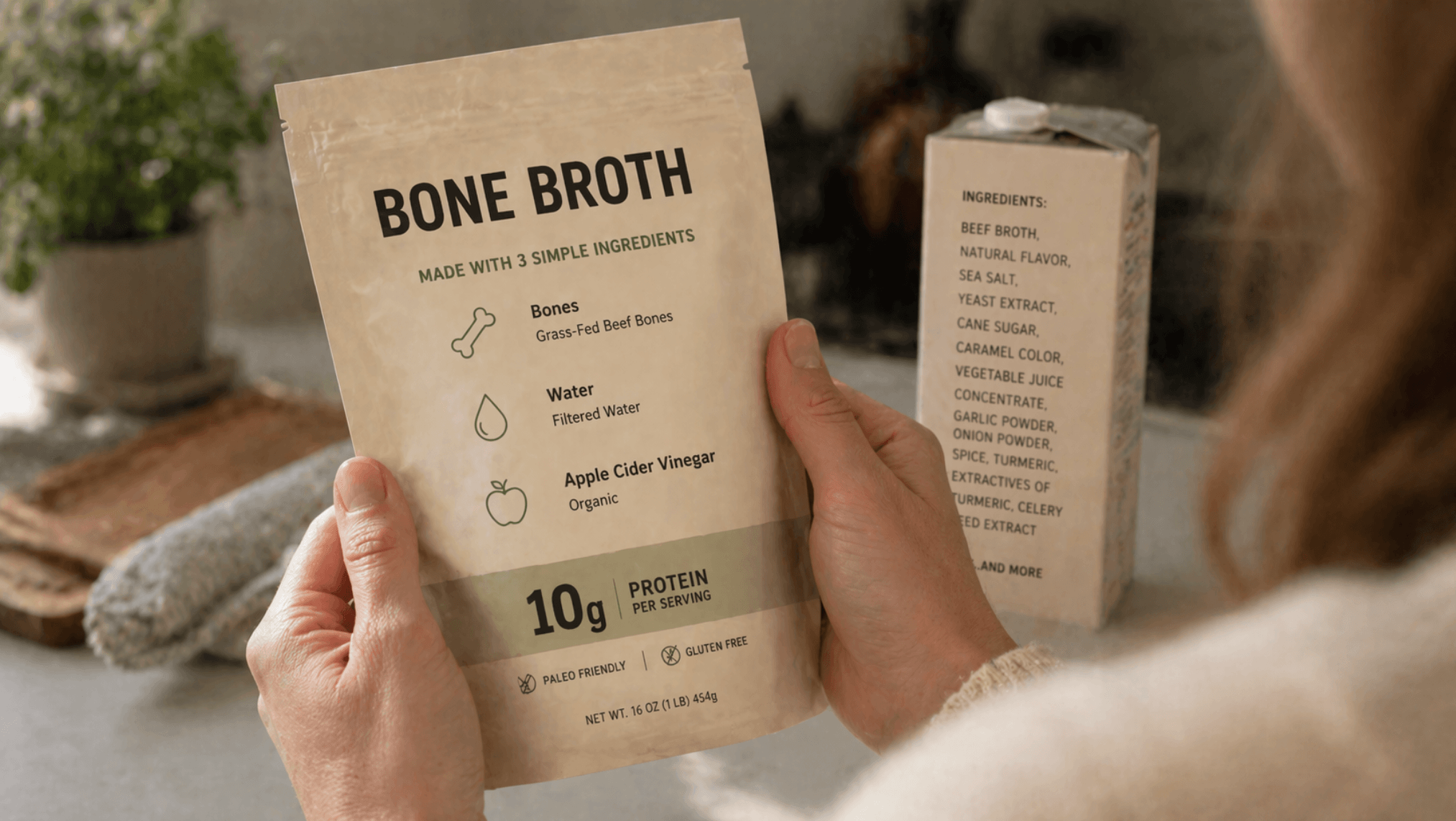
Next, check the ingredient list. A high-quality broth should be simple:
- Bones
- Water
- Apple cider vinegar
If you see added ingredients such as natural flavors, yeast extract, or thickeners like carrageenan, the broth has likely been adjusted after cooking.
Protein content is another practical check. For liquid broth, aim for about 8 to 10 grams of protein per serving. This gives you a general sense of how concentrated the broth is.
Organic certification can be helpful. Organic grass fed bone broth means the animal was raised without synthetic pesticides, antibiotics, or added hormones. However, it does not replace the importance of a fully grass-based diet.
Also look at sourcing transparency. Where were the cattle raised? Is the origin clearly stated? The best grass fed bone broth products are usually clear about sourcing and production.
If you use broth daily, it is worth being selective. If you use it occasionally in cooking, there is more flexibility.
Grass-Fed Bone Broth Powder vs Liquid
Once you have chosen sourcing, the next decision is format: powder or liquid.
Powdered options, including organic grass fed bone broth powder, are built for convenience. They are shelf-stable, easy to store, and simple to use when traveling or during busy days. This makes it easier to use bone broth consistently.
The tradeoff is concentration. Some powders provide less collagen and protein per serving compared to well-made liquid broth. Quality also varies more by product.
Liquid broth is closer to traditional preparation. It is slow-simmered and ready to drink or cook with. A typical serving of grass fed beef bone broth provides about 6 to 10 grams of protein. This makes it a better fit if you plan to use it daily.
So which one makes more sense:
- Choose powder if you need convenience and portability
- Choose liquid if you want a more consistent and traditional broth
If you want a detailed comparison, see our guide on bone broth powder vs liquid.
Frequently Asked Questions
Is grass-fed bone broth better than regular bone broth?
Yes, grass fed bone broth is generally better than regular bone broth because it comes from pasture-raised animals with more consistent fat composition and collagen quality. It often has a better omega-3 to omega-6 ratio and lower exposure to antibiotics and added hormones. The difference is most noticeable in fat profile and collagen consistency. For occasional use, the impact may be small. If you use bone broth regularly, sourcing becomes more important.
What is the difference between grass-fed and grass-fed and finished bone broth?
Grass-fed means the animal ate grass at some point, while grass-fed and finished means it ate grass for its entire life with no grain finishing. In practice, some animals labeled as grass-fed may still be finished on grain. Grass-fed and finished ensures a consistent pasture-based diet, which leads to more consistent fat composition and collagen quality in grass fed bone broth. For most buyers, grass-fed and finished is the more reliable standard.
Is organic the same as grass-fed for bone broth?
No, organic and grass-fed are not the same for bone broth. Organic refers to how the animal was raised, including no synthetic pesticides, antibiotics, or added hormones. Grass-fed refers to the animal's diet. A product can be organic without being grass-fed, and grass-fed without being organic. For the most consistent sourcing, look for organic grass fed bone broth that is also grass-fed and finished.
How much protein is in grass-fed bone broth?
A typical serving of liquid grass fed bone broth contains about 6 to 10 grams of protein, primarily from collagen. It is not a complete protein because it lacks tryptophan, but it is rich in amino acids such as glycine, proline, and hydroxyproline. These are associated with connective tissue, gut lining, and skin support. If you use it regularly, choosing broth with around 8 to 10 grams of protein per serving can help ensure better concentration.
What should I look for when buying grass-fed bone broth?
Look for grass fed bone broth that is labeled "grass-fed and finished," has a short ingredient list, and provides at least 8 grams of protein per serving. A simple formula should include bones, water, and apple cider vinegar. Avoid products with added fillers such as natural flavors, yeast extract, or carrageenan. Organic certification is a useful addition, but not required. It is also important to check for sourcing transparency. The best grass fed bone broth products clearly state where the cattle were raised and how the broth is made.
Conclusion
Grass fed bone broth sourcing matters because it affects collagen quality, fat composition, and overall consistency. Better sourcing can also reduce exposure to unwanted inputs.
Focus on a few key signals. Look for grass-fed and finished, check for a short ingredient list, and choose brands that are clear about where and how their broth is made.
You do not need to prioritize this for every meal. But if you drink bone broth regularly, sourcing is worth paying attention to.